Quick answer: Pressure washing can remove visible surface buildup from compatible concrete, but mechanical removal alone does not change the moisture, shade or debris conditions that allowed growth to develop. Treatment and complete rinsing may be part of the cleaning plan.
Jacksonville context: Jacksonville’s warm, humid climate makes green and dark organic buildup a common exterior-cleaning issue. Whether pressure washing removes it safely depends on the surface: concrete, siding, roofs, fences and screens should not all receive the same mechanical force. View Jacksonville service coverage.
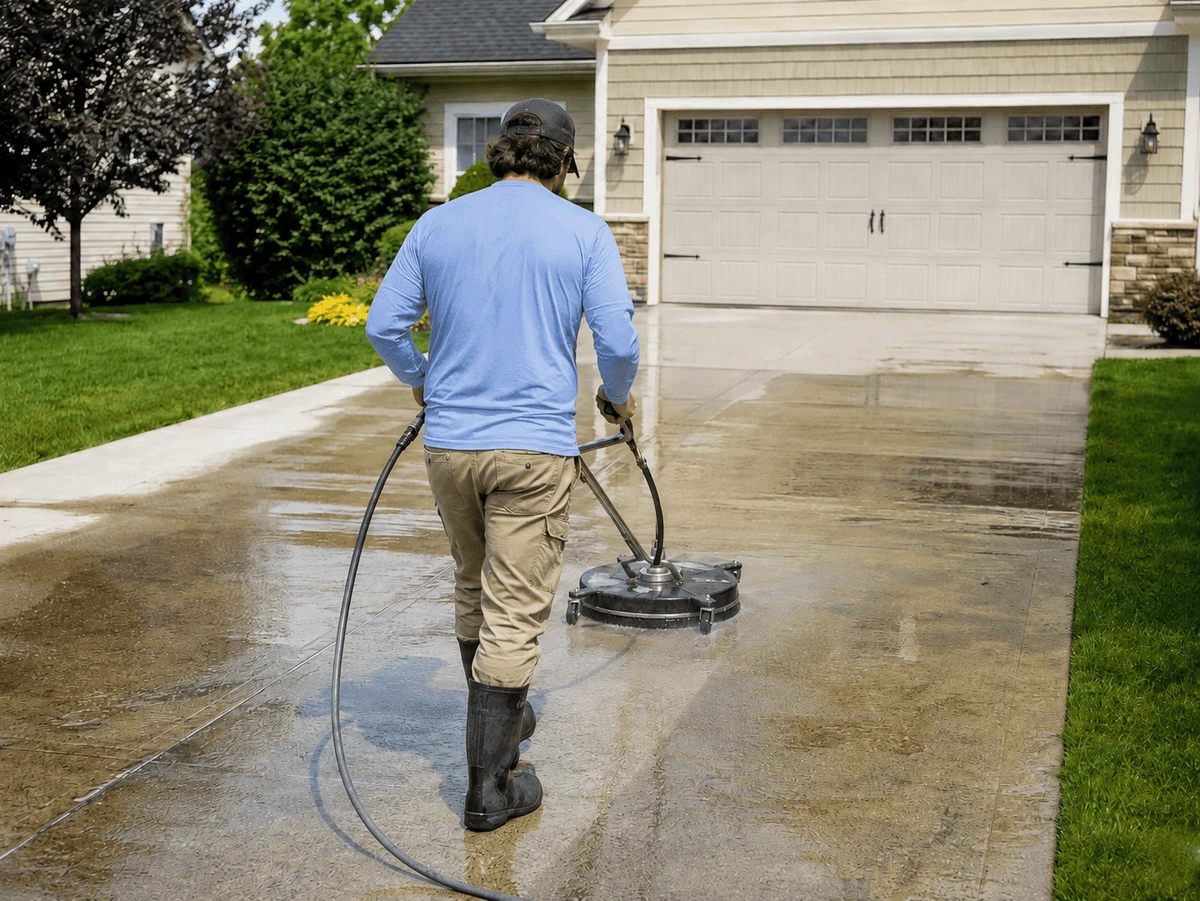
Concrete can hold organic film in texture
Broom-finished and porous concrete can collect dirt, pollen and moisture in surface texture. Even after loose material is removed, dark or green organic film may need treatment rather than repeated close-range pressure.
Mold, mildew and algae are not identical labels
Homeowners often use the terms interchangeably for dark or green exterior growth. From a cleaning standpoint, the important questions are whether the material is removable organic buildup, whether the surface can accept the chosen chemistry and whether there is an underlying moisture issue.
Cleaning does not eliminate future moisture
Shade, irrigation, roof runoff and slow drying can recreate favorable conditions after a clean surface is restored. Maintenance frequency therefore depends on the property rather than a permanent one-time treatment.
Indoor mold guidance is not an exterior-concrete recipe
The EPA emphasizes moisture control for mold problems and cautions against assuming that simply killing mold is enough. Exterior concrete cleaning is a different application, but the broader lesson still applies: visible cleanup and moisture conditions are separate issues.
What to inspect before treating organic buildup
- Surface: Concrete, siding, wood and roofing have different pressure and chemistry limits.
- Moisture source: Shade, drainage, irrigation and leaks can contribute to recurring growth.
- Type of discoloration: Organic film can be confused with rust, oxidation, mineral staining or coating failure.
- Surroundings: Plants, metals, painted surfaces and drainage paths influence treatment and rinsing.
Why recurring growth is a property condition too
Exterior cleaning can remove visible buildup, but it does not change every environmental condition that supports recurrence. Improving drainage, correcting irrigation overspray, removing trapped debris and allowing surfaces to dry can be just as important as the cleaning method when the same area repeatedly turns green or dark.
The safest cleaning decision starts with the material, existing damage, coating condition, access and the type of staining present.
Sources & manufacturer guidance
Treat the organism and protect the substrate
On durable flatwork, controlled pressure may be part of the process. On siding, roofs or screens, chemistry and lower pressure may do more of the work. The visible color can improve quickly, but recurring shade, moisture and vegetation can allow growth to return. Permanent discoloration, oxidation or material damage should not be mistaken for active organic buildup.
Related guides
For a property-specific recommendation, request an exterior-cleaning estimate and include wide photos plus close-ups of the main concern.
Common questions
Can pressure alone remove algae from concrete?
It can remove visible buildup, but treatment may help address organic film in textured or porous surfaces.
Will algae come back after cleaning?
It can if shade, moisture and environmental conditions remain favorable.
Does exterior cleaning fix a moisture problem?
No. Drainage, leaks and irrigation issues should be addressed separately when they contribute to recurring growth.