Quick answer: Soft washing can be a safe and effective way to clean stucco, vinyl siding, fiber-cement siding and many painted exteriors because it relies on appropriate cleaning solution and low-pressure rinsing rather than aggressive pressure. It is not automatically risk-free. Cracks, oxidation, loose paint, damaged caulk, vents, electrical fixtures and water-entry points should be considered before washing.
Jacksonville context: Soft washing can be appropriate for many Jacksonville stucco and siding surfaces when the process is matched to material and condition. Northeast Florida humidity supports organic growth, but lower pressure does not remove the need to inspect paint, oxidation, cracks, seals and fixtures first. View Jacksonville service coverage.
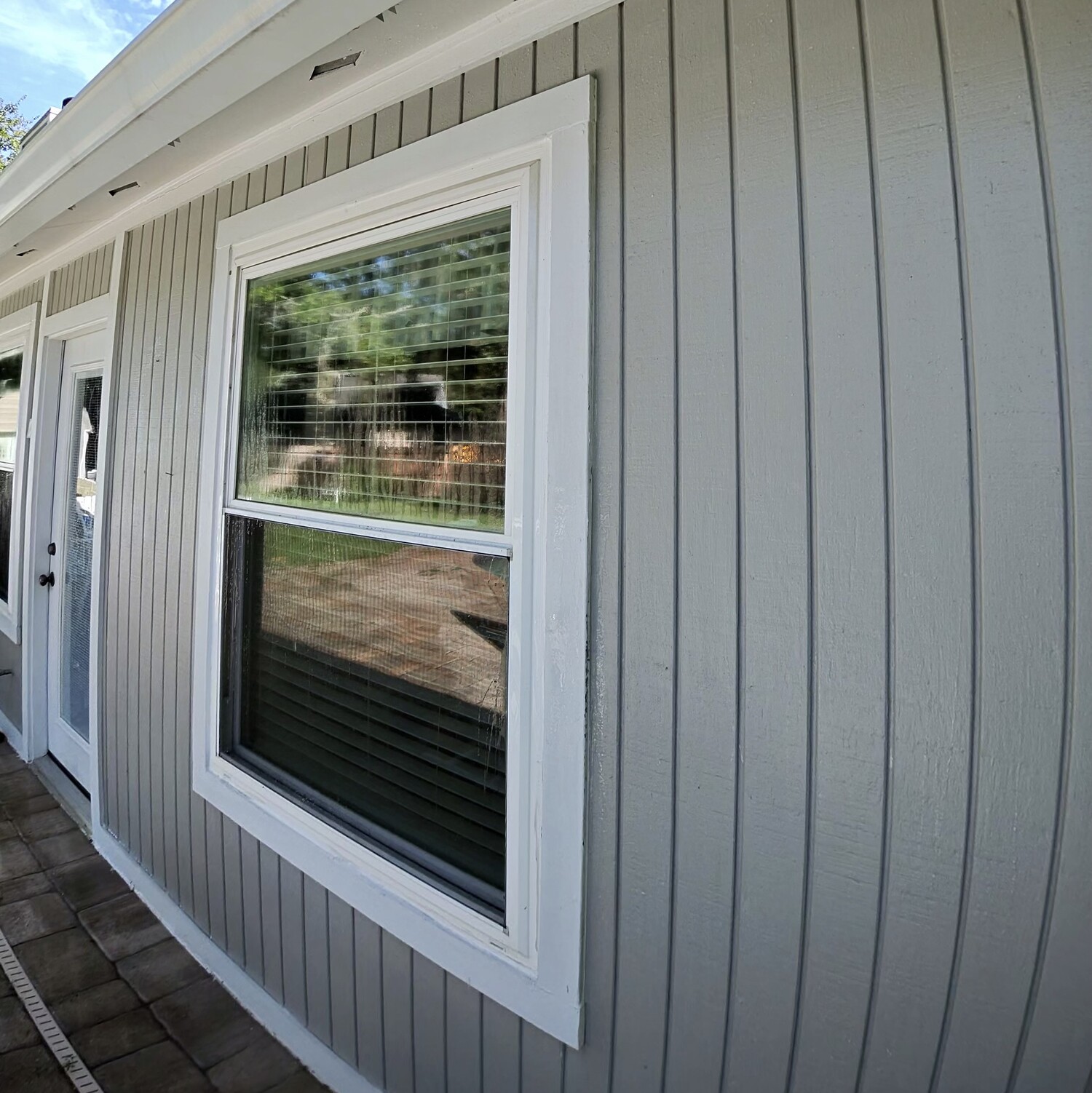
Surface-by-surface safety comparison
| Surface | Why soft washing can fit | Main risks to inspect first |
|---|---|---|
| Painted stucco | Low pressure reduces mechanical impact while chemistry treats organic growth | Cracks, loose paint, patched areas, failing caulk, open penetrations |
| Vinyl siding | Low pressure limits direct force on panels and seams | Oxidation, loose panels, damaged seams, water behind siding |
| Fiber-cement siding | Controlled washing respects the painted finish | Paint condition, caulk joints, cut edges, damaged boards |
| Painted masonry | Chemistry can reduce the need for aggressive pressure | Failing coatings, efflorescence, cracks, prior pressure damage |
| Soffits and fascia | Low-pressure rinsing helps avoid forcing water into assemblies | Vents, loose panels, electrical items, peeling paint |
Why stucco needs controlled pressure
Jacksonville and St. Johns County have many painted stucco homes. Stucco itself can be durable, but the complete wall assembly includes paint, cracks, sealants, windows, vents, penetrations and transitions to soffit or trim.
High pressure aimed into cracks or around openings can force water where it does not belong. Soft washing reduces mechanical force and allows treatment chemistry to do more of the cleaning.
What about vinyl siding?
Vinyl can develop algae, mildew, pollen, spider debris and oxidation. Low-pressure cleaning is generally preferable to aggressive close-range pressure because water can be pushed behind panels and chalky oxidation can be disturbed unevenly.
Oxidation often appears as a powdery or chalky film. Washing may expose differences in sun fading or previous cleaning. That is a surface-condition issue, not necessarily evidence that the cleaning “failed.”
Fiber-cement and painted siding
Fiber-cement is durable, but the visible exterior is still a painted finish with joints, caulk and trim. A safe cleaning process should use the least aggressive method that removes the buildup, maintain sensible spray direction and avoid concentrating force around seams.
Five conditions that should be identified before soft washing
- Loose or failing paint: Cleaning can reveal or remove paint that is already losing adhesion.
- Oxidation: Chalky finishes can react unevenly to cleaning and may need separate restoration.
- Cracks and failed caulk: Water-entry points should be noted before spraying.
- Electrical fixtures and cameras: Exterior equipment should be protected or treated carefully.
- Landscaping and sensitive materials: Chemistry should be controlled and surrounding surfaces rinsed appropriately.
Chemistry matters as much as pressure
“Soft” refers primarily to lower mechanical pressure. A poorly mixed or poorly controlled cleaning solution can still damage plants, fabrics, metals or finishes. Professional soft washing requires selecting a solution appropriate to the target growth and surface, allowing controlled dwell time and rinsing thoroughly.
More chemical is not automatically better. The goal is enough treatment to clean the surface without unnecessary exposure.
Spray direction matters
Even low-pressure water can cause problems when aimed directly into vents, window seals, door gaps or upward behind siding. A safe operator manages angle as well as pressure.
What soft washing does not repair
| Condition | Can normal soft washing fix it? |
|---|---|
| Loose paint | No. Cleaning may reveal the failure more clearly. |
| Faded / oxidized finish | No. Normal washing removes dirt and organic growth, not sun damage. |
| Cracked stucco | No. Cracks require repair. |
| Failed caulk | No. Sealant should be repaired separately. |
| Rust staining | Not necessarily. Specialty treatment may be required. |
| Algae / mildew | Often yes, when treated appropriately. |
Before hiring: Ask the contractor what pressure will reach the wall, how they identify oxidation or loose paint, what they do around plants and openings, and which stains are outside the normal house-wash scope.
When should washing be postponed?
Cleaning may need to wait when there are significant open cracks, active water-intrusion problems, failing exterior coatings, electrical hazards or repair work that should be completed first. A wash should not be used to hide a maintenance issue.
Low pressure is only one part of a safe process
Safety also depends on compatible chemistry, controlled dwell time, thorough rinsing and runoff attention. Painted stucco with failing paint, oxidized vinyl and damaged siding can still show problems after a low-pressure wash. A test area is useful when the finish or previous maintenance history is uncertain.
Related guides
For a property-specific recommendation, request an exterior-cleaning estimate and include wide photos plus close-ups of the main concern.
Common questions
Can soft washing damage stucco?
It can if chemistry, pressure or spray direction is inappropriate, or if the stucco system already has cracks or coating failure. A controlled low-pressure process is generally safer than aggressive pressure.
Can soft washing damage vinyl siding?
Improper technique can still cause issues, especially around seams, oxidation and openings. Low pressure and correct spray direction reduce those risks.
Will soft washing remove oxidation?
Normal house washing is not an oxidation-restoration process. It may expose oxidation more clearly, and specialized restoration may be needed.
Is bleach always used in soft washing?
Sodium-hypochlorite-based solutions are commonly used for organic exterior growth, but the exact chemistry and concentration depend on the surface and condition. Homeowners should focus on controlled application, surface compatibility and rinsing rather than one universal mix.