Quick answer: Professional pressure washing should include a clearly defined scope, surface and condition review, the correct cleaning method for each material, appropriate pretreatment or detergent, property protection, consistent cleaning and rinsing, honest specialty-stain limitations, cleanup and a final quality check. If the quote does not define these items, ask before approving the work.
Jacksonville context: Professional pressure washing in Jacksonville should be defined by a repeatable process, not simply by owning a pressure washer. Northeast Florida properties often require different approaches for concrete, siding, roofing, screens, gutters and specialty stains. View Jacksonville service coverage.
Professional pressure washing checklist
| Stage | What should be addressed |
|---|---|
| 1. Scope | Exact surfaces, boundaries, add-ons and exclusions |
| 2. Condition review | Material, cracks, loose paint, oxidation, staining, drainage and access |
| 3. Method | Pressure, soft washing, surface cleaner, detergent and specialty chemistry |
| 4. Property protection | Plants, outlets, doors, cameras, windows, pool areas and movable items |
| 5. Cleaning | Pretreatment, consistent passes, edges, dwell time and appropriate pressure |
| 6. Rinsing | Removal of loosened soil and residual solution from cleaned and adjacent areas |
| 7. Limitations | Oil, rust, oxidation, failing paint, etching and permanent stains |
| 8. Cleanup | Debris, hose removal, overspray check and restored access |
| 9. Final check | Walkthrough, photos or correction of obvious missed areas |
1. A clearly defined scope
The proposal should say what is being cleaned. “Exterior cleaning” is too vague if the homeowner expects siding, soffits, gutters, driveway, sidewalk, pool deck and fence.
A strong scope can identify each surface separately and note specialty services. This makes it easier to compare quotes and prevents disagreements after the job.
2. Surface and condition review
Before cleaning begins, the company should notice conditions that affect method or expectations: loose paint, oxidation, cracked stucco, damaged screens, old pressure marks, severe oil, rust, irrigation staining, fragile roof areas or standing-water problems.
Not every condition requires a formal inspection report, but it should influence the process.
3. The right method for each surface
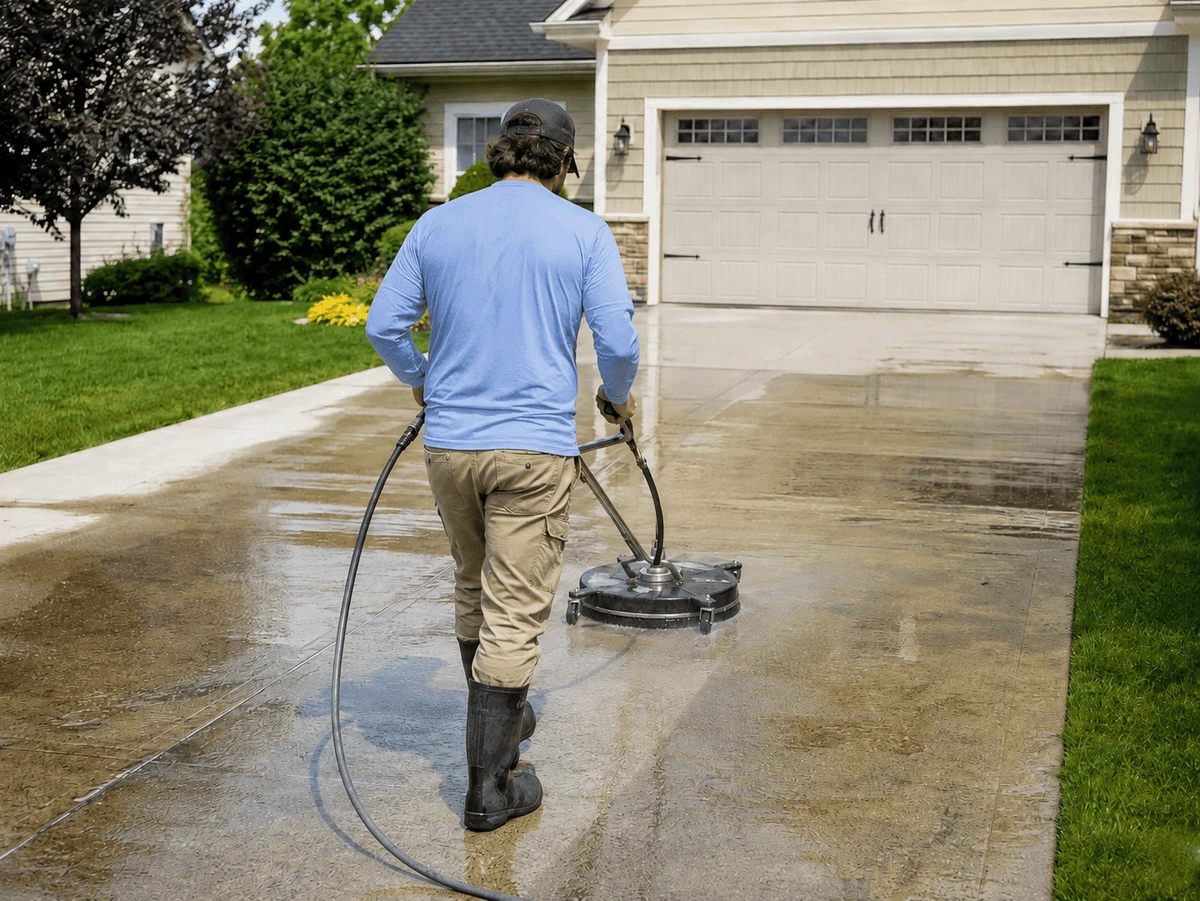
Professional work is surface-specific. Concrete can often be cleaned with a surface cleaner and controlled pressure. Houses may need soft washing. Roofs generally require a roof-appropriate low-pressure treatment. Screens and painted aluminum need caution.
The contractor should be able to explain why the method fits—not simply name the machine.
4. Pretreatment and chemistry where appropriate
Cleaning solution can help loosen organic growth and reduce the mechanical pressure needed. Driveways may benefit from pretreatment before surface cleaning. Houses may be treated with a low-pressure cleaning solution. Rust and oil can require different products.
The scope should distinguish normal organic cleaning from specialty stain removal.
5. Property protection
- Move or protect furniture and fragile décor where required.
- Keep vehicles away from active cleaning areas.
- Identify exterior outlets, cameras and sensitive electrical items.
- Consider door seals, windows, vents and openings.
- Wet or otherwise protect landscaping when chemistry is used.
- Use extra care around pools, screens and painted aluminum.
6. Uniform cleaning—not just visible wand marks
For concrete, consistent overlapping surface-cleaner passes help avoid stripes. Edges and corners may require separate wand work. The area should be rinsed so loosened material does not settle back onto the cleaned slab.
On houses, uniform application and rinsing matter more than raw pressure.
7. Honest stain limitations
| Condition | Normal washing result | Possible next step |
|---|---|---|
| Algae / mildew | Often responds well to proper treatment | Address shade, moisture and maintenance interval |
| Oil | Can improve but absorbed oil may remain | Degreasing / specialty treatment |
| Rust / irrigation iron | Pressure alone may do little | Acid-based or specialty rust treatment where appropriate |
| Oxidation | Can become more visible or uneven | Separate oxidation-restoration discussion |
| Loose paint | May lift during cleaning | Repair/repaint rather than cleaning promise |
| Old etching | Usually permanent | Surface repair or acceptance of prior damage |
8. Cleanup and final quality check
Professional work should end with hose and equipment removal, rinse checks, reasonable cleanup and a final review of the cleaned areas. For larger jobs, before-and-after photos can document scope and hard-to-see areas.
Homeowner shortcut: Before booking, ask the contractor to describe the process in one paragraph. If the answer covers the surface, method, scope, protection and limitations, you probably have enough information to compare the quote intelligently.
A professional scope should connect method, protection and expectations
Before work begins, the company should identify material, obvious damage, access, runoff path and stain type. The quote should explain included surfaces, while the crew adapts pressure or chemistry to the substrate and protects reasonable sensitive items. Results should be judged against the agreed scope rather than unrealistic promises.
Related guides
- How To Choose A Pressure Washing Company
- Power Washing Vs Pressure Washing Vs Pressure Cleaning
- Can Pressure Washing Damage Concrete
For a property-specific recommendation, request an exterior-cleaning estimate and include wide photos plus close-ups of the main concern.
Common questions
Should pressure washing include chemicals?
Not always, but cleaning solutions are common for organic growth, house washing and some concrete pretreatment. The exact chemistry should fit the surface and stain.
Should driveway cleaning include pretreatment?
It often does when algae or organic buildup is present, but practices vary. Ask whether pretreatment and post-treatment are included in the quoted scope.
Should a professional guarantee every stain comes out?
No. Some staining is absorbed, chemically bonded or caused by permanent surface damage. A professional should explain limits before the work.
Should cleanup be included?
Reasonable cleanup of the work area, hoses and loosened debris should be part of a professional service. Specialty debris removal should be defined if applicable.