Quick answer: White vinyl and PVC fences usually clean best with surface-appropriate chemistry, adequate dwell time and controlled low pressure. Aggressive close-range pressure can mark panels or damage weak sections. Wood, painted fences and composite materials require different judgment, and rust or irrigation stains may need specialty treatment beyond a normal wash.
Jacksonville context: Fence cleaning in Jacksonville often means green organic buildup, irrigation overspray, sun exposure and mixed materials on the same property. Northeast Florida conditions can affect vinyl, PVC, painted wood and bare wood differently, so material should lead the plan. View Jacksonville service coverage.
Match the cleaning method to the fence material
| Fence material | Common problem | Main cleaning concern |
|---|---|---|
| Vinyl / PVC | Algae, mildew, pollen, sprinkler staining | Avoid excessive pressure, protect joints and identify oxidation |
| Painted fence | Organic growth, dirt, chalking | Loose paint and oxidation may be exposed by washing |
| Composite | Dirt, organic growth, surface staining | Follow material-specific limits; avoid scarring finish |
| Wood | Mildew, graying, algae, tannins | High pressure can fur fibers and permanently stripe boards |
| Metal / aluminum | Dirt, oxidation, rust transfer | Coating condition and corrosion require inspection |
Why vinyl fences get green in Florida
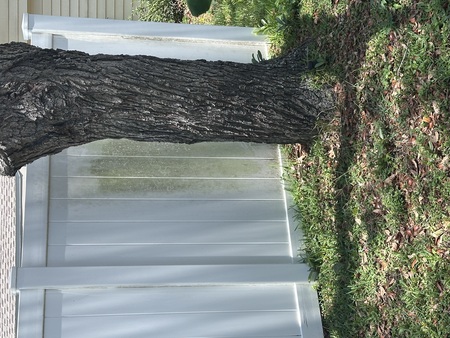
Humidity, shade, irrigation and landscaping can keep fence surfaces damp long enough for algae and mildew to return. Panels near shrubs, north-facing property lines and sprinkler zones often show buildup first.
Because the growth is organic, more pressure is not necessarily the best solution. Chemistry and dwell time can loosen the contamination so the surface can be rinsed with less mechanical force.
Vinyl fence cleaning vs. oxidation
Dirt and algae sit on the surface. Oxidation is weathering of the material or coating itself. A chalky white residue or uneven faded appearance may remain even after the fence is clean. Washing is not a restoration process for deteriorated vinyl or paint.
Before hiring: ask whether the contractor distinguishes normal organic buildup from oxidation. A fence can be clean and still look faded or chalky if the surface itself has weathered.
What about orange sprinkler stains?
Orange staining from irrigation can be iron-related. Standard house-wash chemistry or pressure may do little to remove it. Specialty rust treatment may be needed, and the product must be compatible with the fence material.
Read our rust and irrigation stain guide for the difference between mineral staining and ordinary dirt.
Wood fences need a different approach
Wood is easy to damage with a pressure washer. Working too close or using too much pressure can create visible stripes, raise wood fibers and leave the surface rough. A professional should consider wood condition, paint or stain, age and the homeowner's plans for refinishing.
If the goal is preparing wood for stain or paint, that is a different scope from simply removing green organic buildup.
A professional fence-cleaning process
- Identify material: vinyl, PVC, composite, painted wood, bare wood, aluminum or mixed materials.
- Inspect condition: loose panels, cracked boards, oxidation, peeling paint, damaged caps and weak posts.
- Identify stains: organic growth, rust, irrigation iron, sap, tannins and paint transfer require different treatment.
- Protect surroundings: landscaping, gates, hardware, electrical items and neighboring property.
- Use appropriate chemistry: treat the contamination rather than relying on excessive pressure.
- Rinse consistently: avoid creating bright stripes or leaving chemical residue.
- Review after drying: wet surfaces can hide oxidation, fading or permanent stains.
How much fence should be included?
Quotes can differ because one contractor includes only the street-facing side while another includes both faces, gates, posts and caps. Long fence lines also change labor and chemical use. Confirm the exact linear footage and which sides are being cleaned before comparing price.
When fence cleaning should be bundled
Fence cleaning often makes sense with house washing, driveway cleaning or pool-area cleaning because the same exterior buildup affects multiple surfaces. Bundling can also reduce setup time compared with separate visits.
Clean a fence as a material system, not as a long wall
Posts, panels, caps, gates, hinges and adjoining masonry can each have different limits. Wood may be vulnerable to raised fibers and wand marks, while vinyl can show oxidation, fading or mineral staining that routine washing will not reverse. A good inspection also looks for loose sections, brittle components and coating failure.
Related guides
- Vinyl Fence Cleaning Florida
- Wood Vs Vinyl Fence Cleaning
- Does Pressure Washing Remove Mold Mildew Algae
For a property-specific recommendation, request an exterior-cleaning estimate and include wide photos plus close-ups of the main concern.
Common questions
What is the safest way to clean a white vinyl fence?
Use surface-appropriate cleaning solution and controlled low pressure rather than aggressive close-range blasting. Organic growth, oxidation and rust should be identified separately.
Can pressure washing damage a vinyl fence?
Yes. Excessive pressure at close range can mark panels, force water into joints or damage weak components. Lower-pressure cleaning is often sufficient for normal organic buildup.
Why does a white vinyl fence look chalky after cleaning?
A chalky finish can be oxidation or weathering rather than dirt. Normal washing may reveal oxidation more clearly but does not restore deteriorated material.
Can irrigation rust be removed from vinyl fencing?
Often it can be improved with compatible specialty treatment, but the exact product and dwell time should fit the material. Do not assume a concrete rust remover is automatically safe for vinyl.